Told you have a mass on your kidney?
Most kidney tumours are found early, by chance, and most can be cured. Here is what happens next, and how we treat them.

Most kidney tumours are found early, by chance, and most can be cured. Here is what happens next, and how we treat them.
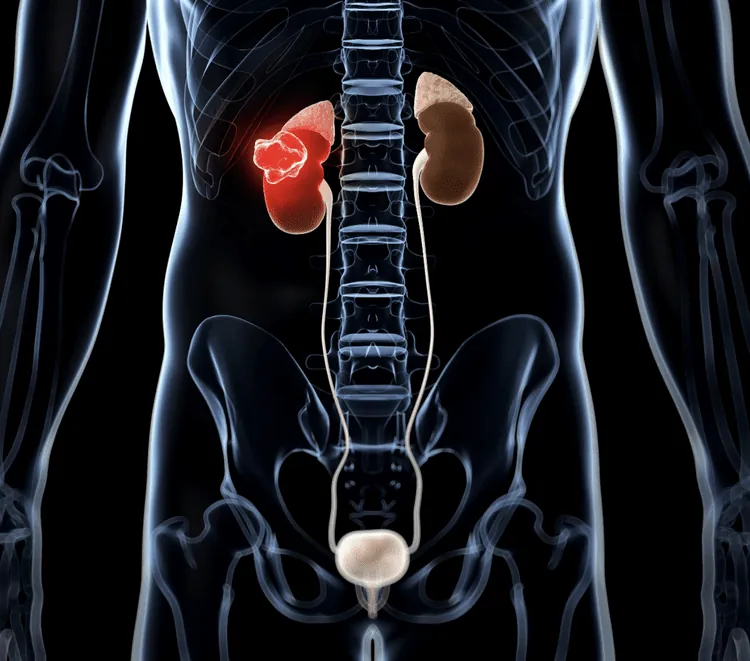
Most kidney tumours we see are found by accident. Someone has an ultrasound or CT scan for another reason, such as back pain, a gallbladder problem or kidney stones. Then the report mentions a mass (a lump) on the kidney.
That can be upsetting to read. But it also means the tumour is usually found early, while it is small and has not spread. Small kidney tumours are among the most treatable cancers we see. Many people go on to live a full, normal life, and their kidneys keep working well.
Some kidney tumours do cause symptoms, such as blood in the urine, a dull ache in the side or back, or a lump you can't explain. If you have any of these, see your family doctor. These symptoms are usually caused by something other than cancer, but they should be checked.
Usually, but not always. About 8 in 10 solid kidney masses are a cancer called renal cell carcinoma (RCC). The rest are benign, which means they are not cancer. The most common ones are called oncocytoma and angiomyolipoma. They can look like cancer on a scan.
Cysts are different. Simple cysts are small sacs of fluid. They are very common, especially after age 50, and they are harmless. Some cysts have thicker walls or solid parts. These are graded on a scale called the Bosniak scale, which tells us how closely to watch them. If your report mentions a Bosniak grade, we will explain what it means for you.
Do I need a biopsy? Often not. For most solid masses, the scans tell us enough to recommend treatment. A biopsy (taking a small sample with a needle) would not change the plan. We do suggest a biopsy in some cases. For example, we might if the result would help decide between watching the tumour and surgery, or if a tumour looks unusual. We will tell you if a biopsy makes sense for you, and why.
Your family doctor or specialist sends a referral and your scan report to your urologist's office. Your urologist looks at your scans before you arrive.
At your consultation your urologist will:
What to bring:
You are welcome to bring a family member to listen with you.
The right treatment depends on how big the tumour is and where it is, your age and general health, and how well your kidneys work. Surgery is the most common treatment. But it is not the only one, and for some people it is not the best one.
Your urologist will tell you which of these fit your situation and which they recommend. If watching the tumour is a good option for you, they will say so. Operating on every small tumour is not good care.
A nephrectomy is surgery to take out a kidney. It is most often done for kidney cancer, but also for other kidney problems or injuries. It can be done as open surgery, through one larger cut, or as laparoscopic (keyhole) surgery, through a few small cuts. Keyhole surgery is easier on the body, and you recover faster.
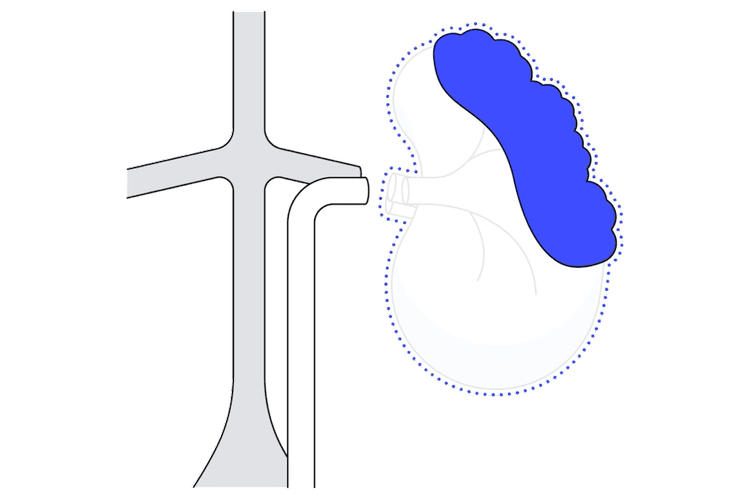
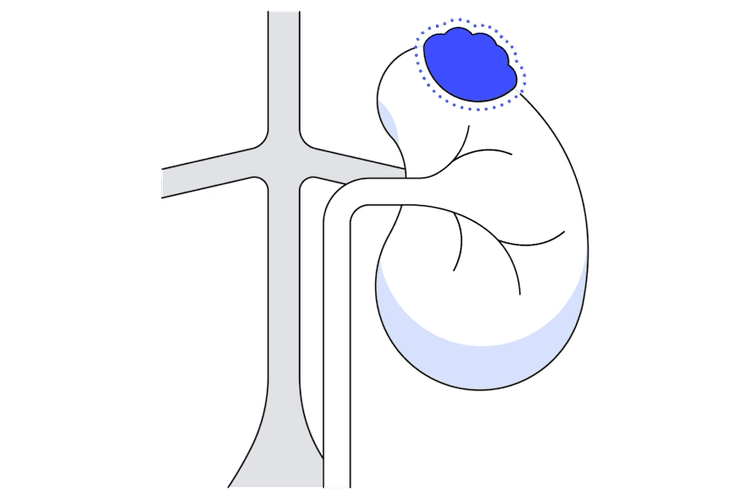
In a radical nephrectomy, the whole kidney is taken out. Sometimes nearby tissue is taken out too, such as the adrenal gland (a small gland on top of the kidney) and lymph nodes. In a partial nephrectomy, only the tumour and a little healthy tissue around it are taken out. When it can be done, this is usually the better choice, because it helps the kidney keep working. Partial nephrectomy is also called "kidney-sparing" or "nephron-sparing" surgery.
Most kidney surgery is now done through a few small cuts, using a camera and thin instruments, instead of one large cut. This is called keyhole, minimally invasive or laparoscopic surgery. Compared with open surgery, it usually means:
Keyhole surgery is a skill, and the results depend on the surgeon. Dr. Klinghoffer regularly does the hardest kind of keyhole kidney surgery, partial nephrectomy. His results are shown below.
Whenever a tumour can be taken out while leaving the rest of the kidney, that is the goal. Keeping as much kidney as you can helps protect you from kidney disease, high blood pressure, and heart and blood vessel problems later in life. Partial nephrectomy is harder to do than taking out the whole kidney, and doing it by keyhole surgery is harder still. So two of the best ways to judge a kidney surgery program are:
A few very large or complicated tumours are still best treated with open surgery. Your surgeon will tell you clearly if that is true for you. The goal is always to take out all of the cancer as safely as possible. We choose the operation to fit the tumour, not the other way round.
There is more than one way to do keyhole kidney surgery, and more than one kind of equipment. None of that matters as much as the surgeon's actual results. Before you have kidney surgery anywhere, ask:
Laparoscopic partial nephrectomy, March 2024 to March 2025
Cases performed by Dr. Zachary Klinghoffer at Scarborough Health Network.
In hospital. Most people go home the day after a partial nephrectomy. You will be up and walking the same evening. We treat pain with regular pain relievers, such as acetaminophen and anti-inflammatory medicine. Most people need little or no stronger (opioid) pain medicine after the first day.
The first two weeks. You will probably feel tired and a bit sore around the cuts. You can shower from day two, walk as much as you like and use stairs. Don't lift more than 10 lb (about a full kettle). Don't drive while you are taking opioid pain medicine.
Weeks two to six. Most people go back to desk work within two weeks. Most go back to physical work or exercise after four to six weeks.
Living with one kidney, or part of one. One healthy kidney can do the work of two. After a partial nephrectomy, your kidney usually works almost as well as it did before. At your follow-up visits we check your blood pressure and a blood test of kidney function (creatinine). We ask your family doctor to keep checking both over the years.
Follow-up. The lab report on the tumour (the pathology report) takes about two weeks. It tells us the type of tumour and how far it had grown (its stage). Based on that, your urologist plans your check-ups. This is usually a CT scan or ultrasound at 6 months, then once a year for several years. After a small tumour is taken out, the chance of the cancer coming back is low. Regular scans catch the rare case early.
Does my family need to be checked? Rarely. Most kidney cancer does not run in families. If your age, type of tumour or family history suggests it might, your urologist will tell you and refer you to a genetic counsellor.
Small kidney tumours grow slowly, usually a few millimetres a year. Being seen within a few weeks is fine. A wait that long does not change how well treatment works. People with large tumours, or symptoms such as heavy bleeding, are seen sooner.
Yes. Consultation, imaging, surgery, hospital stay, and follow-up are all covered. There is no charge to you.
Almost never. For nearly everyone, taking out a tumour, or even a whole kidney, leaves more than enough kidney function for a normal life. If your kidneys already don't work as well as they should, your urologist will talk with you about it. They may also involve a kidney specialist (nephrologist).
Yes. Ask your family doctor to refer you to one of our urologists, and make sure your scans can be shared.
At Scarborough Health Network, Centenary site, a short walk from our office in the Medical Mall.
Yes. You don't need to stop doing anything while you make a plan. Keep taking your usual medicines unless your urologist tells you otherwise.
Ask your family doctor or specialist to refer you to one of the urologists below. We see patients from across Scarborough, Durham and the Greater Toronto Area.
Fax the referral to the office of the urologist you choose. Please include the imaging report, the name of the imaging facility, recent creatinine/eGFR, and the medication list. Mark the referral urgent for a mass over 7 cm, visible hematuria, or suspected metastatic disease.
Further reading: Kidney Cancer Canada, patient information and support in Canada; Canadian Cancer Society: kidney cancer, a plain-language overview.